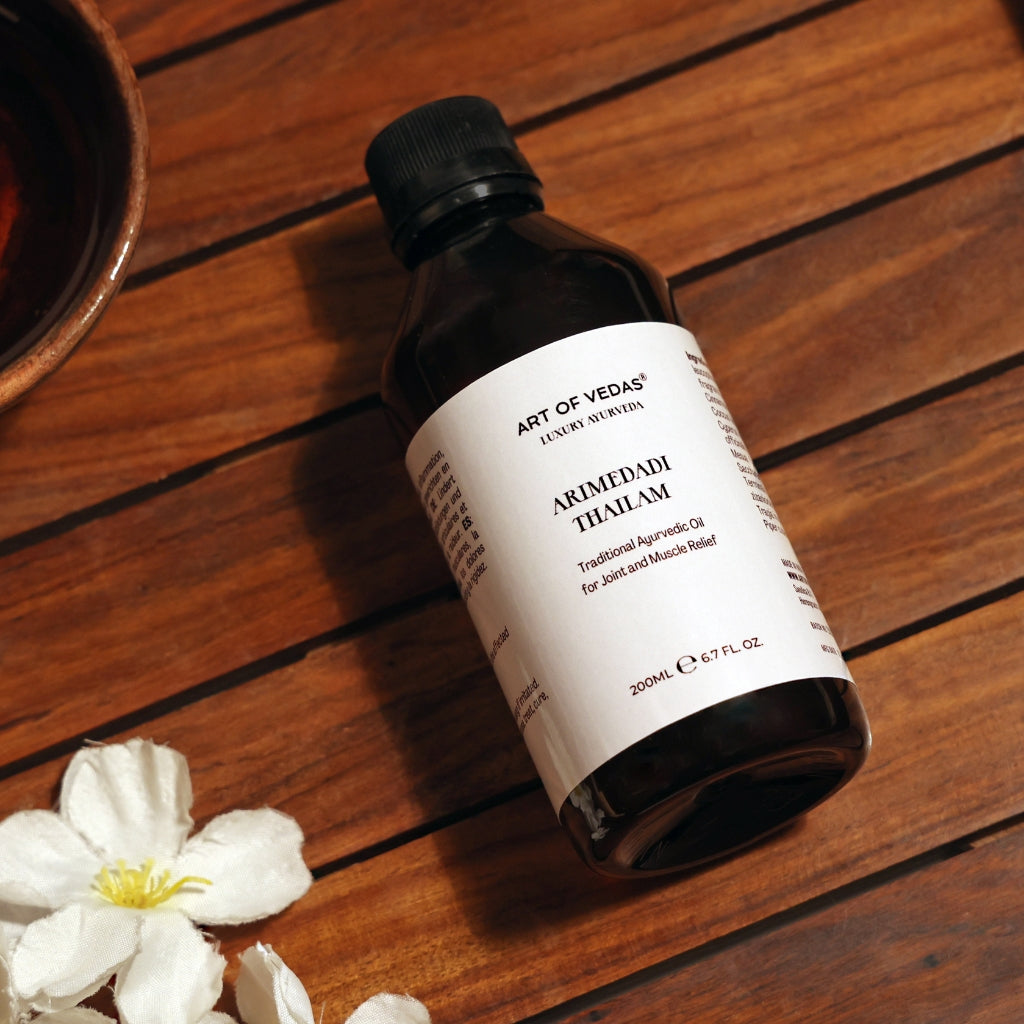
Arimedadi Thailam

(5)

160,00 kr

800,00 kr l

Arimedadi Thailam er en klassisk Ayurvedic olie, der er specielt formuleret til Gandusha (olie træk) og mundpleje. Refereret i Ashtanga Hridayam under Mukha Roga Chikitsa (oral sundhedshåndtering), kombinerer denne traditionelle formel 31 potente urter i en sesamoliebase for at støtte sunde tandkød, styrke tænder, frisk ånde og fremme generel mundhygiejne.

Formuleringen er bygget omkring Arimeda (Hvid Akacie) og Khadira (Cutch-træ), to af Ayurvedas mest værdsatte sammentrækkende urter til mundsundhed, kombineret med Triphala for blid rensning og aromatiske krydderier som Nellike, Muskatnød og Kamfer for friskhed og rensning. Bruges dagligt som en del af Dinacharya (Ayurvedic morgenrutine), tilbyder Arimedadi Thailam en naturlig, tidstestet tilgang til at opretholde en sund mund og støtte kroppens første forsvarslinje.

Nettomængde

INGREDIENSER

Sesamolie, Acacia Catechu, Acacia Leucophloea, Cinnamomum Camphora, Myristica Fragrans, Syzygium Aromaticum, Caesalpinia Sappan, Cinnamomum Tamala, Cinnamomum Zeylanicum, Coccus Lacca, Coleus Vettiveroides, Curcuma Longa, Cyperus Rotundus, Elettar Cardamomum, Emblica officinalis, ficus benghalensis, glycyrrhiza glabra, mesua ferrea, mimosa pudica, rubia cordifolia, saccharum officinarum, symplokos racemosa, terminala bellerica, terminalia chebula, vetiveria zizanioides, woodfordia fruticosa, myrica esculenta, terminalia chebula Tragia Involucrata, Prunus cerasoides, Prunus avium, Piper Cubeba.

Arimedadi Thailam by Art of Vedas - Authentic Ayurveda

160,00 kr

800,00 kr l

160,00 kr

800,00 kr l
The image displays Arimedadi Thailam, a premium Ayurvedic product, prominently showcasing its key selling points for optimal visibility in search results. The product is presented in an elegant, traditional bottle, emphasizing its natural and authentic Ay

Arimedadi Thailam: Beyond Oral Health

Arimedadi Thailam is one of Ayurveda's most respected formulations for oral health. Mentioned in the Ashtanga Hridayam, this oil was specifically developed for Gandusha (oil pulling) and Kavala (oil swishing), two traditional practices that form part of the Ayurvedic daily routine.

In Ayurveda, the mouth is considered the gateway to the body. Maintaining oral health is not simply about clean teeth—it is about protecting the entire system. The mouth connects to the digestive tract, respiratory passages, and sense organs. By caring for the oral cavity, you support the health of these interconnected systems.

Arimedadi Thailam works through a combination of astringent, aromatic, and soothing herbs that help tighten gum tissue, remove buildup, freshen breath, and create a balanced oral environment.

The Foundation: Arimeda and Khadira

The formulation takes its name from Arimeda (Acacia leucophloea), also known as White Acacia or Distiller's Acacia. This tree bark has been valued in Ayurveda for centuries for its powerful Kashaya (astringent) properties. It helps tighten and tone the gum tissue, supporting firm, healthy gums that hold teeth securely.

Working alongside Arimeda is Khadira (Acacia catechu), one of Ayurveda's most celebrated herbs for oral health. Known as Cutch Tree or Black Catechu, Khadira is rich in natural tannins that provide strong astringent action. Traditionally, Khadira has been used for:

  • Supporting healthy, firm gums
  • Helping reduce gum bleeding and sensitivity
  • Promoting oral tissue healing
  • Freshening breath naturally

Together, these two Acacia species form the astringent backbone of Arimedadi Thailam, creating a formula that genuinely tightens and strengthens oral tissues.

Triphala: The Classical Cleanser

Every effective Ayurvedic oral care formula includes Triphala—the "three fruits" combination of Haritaki (Terminalia chebula), Bibhitaki (Terminalia bellirica), and Amalaki (Emblica officinalis). In Arimedadi Thailam, Triphala serves multiple purposes:

Haritaki (Terminalia chebula): Known as the "King of Medicines" in Ayurveda, Haritaki has astringent and cleansing properties. It supports healthy gums and helps maintain oral tissue integrity.

Bibhitaki (Terminalia bellirica): This fruit contributes additional astringent action and supports the removal of excess Kapha (mucus and buildup) from the oral cavity.

Amalaki (Emblica officinalis): Rich in natural vitamin C and antioxidants, Amalaki nourishes the gum tissue and supports collagen health, contributing to strong, resilient gums.

Aromatic Spices for Freshness and Purification

What distinguishes Arimedadi Thailam from plain oil pulling is its complex blend of aromatic spices. These herbs do more than simply freshen breath—they have been traditionally valued for their purifying and protective properties:

Lavanga (Syzygium aromaticum) - Clove: Perhaps the most famous herb for oral care worldwide, Clove has been used for centuries to support tooth comfort and oral freshness. Its warming, aromatic nature helps purify the oral cavity.

Jatiphala (Myristica fragrans) - Nutmeg: This aromatic spice supports oral tissue health and adds a warm, pleasant note to the oil.

Karpura (Cinnamomum camphora) - Camphor: Provides a cooling, refreshing sensation and helps clear the oral passages. Camphor has been traditionally used to support fresh breath and oral comfort.

Tvak (Cinnamomum verum) - True Cinnamon: Warming and aromatic, Cinnamon supports healthy oral flora and adds natural sweetness to the oil.

Tejpatta (Cinnamomum tamala) - Indian Bay Leaf: Another aromatic from the Cinnamomum family, adding depth to the formula's purifying action.

Ela (Elettaria cardamomum) - Cardamom: Known as the "Queen of Spices," Cardamom freshens breath naturally and supports digestive health, which begins in the mouth.

Kankola (Piper cubeba) - Cubeb Pepper: A relative of black pepper with aromatic, warming properties that support oral purification.

Traditional Uses of Arimedadi Thailam

In classical Ayurveda, Arimedadi Thailam is recommended for:

  • Daily Gandusha (oil pulling) as part of Dinacharya
  • Supporting healthy, firm gums
  • Strengthening teeth and tooth roots
  • Freshening breath naturally
  • Maintaining balanced oral pH
  • Supporting oral immunity
  • Soothing sensitive gums and oral tissues
  • Moisturising the lips and preventing cracking
  • Supporting the health of connected sense organs (ears, nose, throat)

Sådan bruger du Arimedadi Thailam

For at udnytte fordelene ved Arimedadi Thailam, skal du følge disse retningslinjer for en berigende oplevelse:

  1. Application Focus: While this oil has a broad range of applications, it's particularly valued for its effects on areas beyond oral care. Consider applying it to specific regions needing attention.
  2. Enhanced Well-being: Incorporate Arimedadi Thailam into your daily wellness practices for an overall boost in health and vitality, acknowledging its diverse benefits.
  3. Warming the Oil: Gently warm the oil to enhance its soothing properties and ensure deeper absorption, promoting more effective healing.
  4. Mindful Massage: Use firm yet gentle pressure during application, employing techniques suitable for the target areas to maximize the oil's effectiveness.
  5. Absorption Period: Allow the oil to penetrate your skin for a sufficient duration, facilitating the therapeutic properties to act effectively.
  6. External Use: Ensure the oil is used topically, adhering to its intended external application.
  7. Post-Application Care: After the oil has been absorbed or the treatment is complete, follow any necessary steps for removal or further care, such as a warm bath or shower, if applicable.

Klassisk Ayurveda Reference

Arimedadi Thailam is referenced in the Ashtanga Hridayam, one of the foundational texts of Ayurveda composed by Acharya Vagbhata. The formula appears in the context of Mukha Roga Chikitsa—the treatment of oral diseases.

The practice of Gandusha itself is described extensively in all three major Ayurvedic texts (Brihat Trayi):

  • Charaka Samhita - describes Gandusha as part of Dinacharya
  • Sushruta Samhita - recommends Gandusha for various oral conditions
  • Ashtanga Hridayam - provides detailed Gandusha protocols and specific oils

Sanskrit Name and Etymology

Sanskrit: अरिमेदादि तैलम् (Arimedādi Tailam)

Breakdown:

  • अरिमेद (Arimeda) - Acacia leucophloea, the primary herb
  • आदि (Ādi) - "and others," indicating additional ingredients
  • तैलम् (Tailam) - oil, specifically medicated oil

The name follows standard Ayurvedic naming convention: the primary ingredient followed by "adi" (and others) and the preparation type.

The Concept of Gandusha in Ayurveda

Vagbhata states in Ashtanga Hridayam (Sutrasthana, Chapter 22):

"Nityaṃ tailaṃ" - "Daily, oil [should be used for oral care]"

This verse establishes sesame oil as the foundation for daily oral hygiene. The text further describes four types of Gandusha based on therapeutic action:

1. Snigdha Gandusha (Oleating): Using oils with sweet, sour, and salty tastes to address Vata imbalances such as dryness and roughness in the mouth.

2. Shamana Gandusha (Pacifying): Using substances with bitter, astringent, and sweet tastes to address Pitta conditions such as burning sensations and inflammation.

3. Shodhana Gandusha (Purifying): Using substances with pungent, sour, and salty tastes to address Kapha conditions such as excessive mucus and buildup.

4. Ropana Gandusha (Healing): Using astringent and bitter substances to support wound healing in the oral cavity.

Arimedadi Thailam, with its combination of astringent, cooling, and aromatic herbs, is considered particularly effective for Shamana and Ropana purposes—pacifying inflammation while supporting tissue healing.

Ayurvedic Pharmacology (Dravyaguna)

Rasa (Taste): Kashaya (Astringent), Tikta (Bitter), Madhura (Sweet), Katu (Pungent)

Guna (Quality): Laghu (Light), Ruksha (Dry), Snigdha (Oily - from sesame base)

Virya (Potency): Predominantly Sheeta (Cooling), with warming elements from spices

Vipaka (Post-digestive effect): Katu (Pungent)

Dosha Action: Kapha-Pitta Shamaka (Pacifies Kapha and Pitta)

Karma (Actions):

  • Dantya - Strengthens teeth
  • Danta Shodhana - Cleanses teeth
  • Danta Shula Hara - Relieves tooth discomfort
  • Mukha Shodhana - Purifies the mouth
  • Mukhavaishadyakara - Creates oral freshness
  • Oshtha Shosha Hara - Prevents lip dryness
  • Daurgandhya Hara - Removes bad odour

Learn More About Arimedadi Thailam

What is Arimedadi Thailam and why is it considered the best Ayurvedic oil for oil pulling?

Arimedadi Thailam is a classical Ayurvedic formulation referenced in the Sahasrayogam specifically designed for oral health and Gandusha (oil pulling) practice. Unlike other Thailams formulated for body massage, Arimedadi Thailam is uniquely crafted for use in the oral cavity — making it the traditional oil of choice for oil pulling.

The formulation combines over 30 herbs in a sesame oil base, with Arimeda (Acacia leucophloea — White Bark Acacia) as the star ingredient. The name itself means "Arimeda and others oil." Key supporting herbs include the Pancha Valkala (five sacred fig tree barks), Triphala, Yashtimadhu (licorice), Khadira (catechu), Manjishta, sandalwood, camphor, and clove, each selected for specific benefits to teeth, gums, and oral tissues.

What makes Arimedadi Thailam particularly effective is its formulation philosophy. The herbs are chosen for their Kashaya (astringent) property that strengthens gum tissue, antimicrobial action that controls harmful oral bacteria, Sukshma (subtle/penetrating) quality that allows the oil to reach between teeth and into gum pockets, tissue-nourishing properties that support oral health rather than just cleansing, and balanced dosha action that addresses Kapha (plaque, mucus) and Pitta (inflammation, bleeding).

What is the correct technique for oil pulling with Arimedadi Thailam? How long should I swish and how often should I do it?

Oil pulling with Arimedadi Thailam is a simple practice, but following the correct technique ensures you get maximum benefits. Here is the traditional method:

Preparation:

Use the oil at room temperature or slightly warm. Practice in the morning on an empty stomach, before brushing teeth. Have warm water ready for rinsing afterward.

Step-by-Step Technique:

For step one, take approximately 10-15 ml (1 tablespoon) of Arimedadi Thailam into your mouth. For step two, without swallowing, begin gently swishing the oil around your mouth. For step three, pull the oil through your teeth, moving it across all areas — cheeks, gums, tongue, and roof of mouth. For step four, continue for 5-20 minutes. If you are new to oil pulling, start with 5 minutes and gradually increase. For step five, the oil will become thinner and milky white as it mixes with saliva. For step six, spit the oil into a trash bin (not the sink — oil can clog pipes). For step seven, rinse your mouth thoroughly with warm water, gargling 2-3 times. For step eight, optionally follow with tongue scraping and then brush your teeth normally.

Important Points:

Never swallow the oil as it contains pulled-out bacteria and toxins. Keep the swishing gentle — aggressive swishing can cause jaw fatigue. If your jaw gets tired, rest briefly and continue. If 15-20 minutes feels too long initially, build up gradually.

Recommended Frequency:

For daily maintenance and prevention, practice 3-4 times per week or daily as part of your morning routine.

For active concerns such as gingivitis, bad breath, or gum sensitivity, practice daily for 2-4 weeks, then reduce to maintenance frequency.

For intensive support with acute issues, practice twice daily (morning and evening) for 7-14 days. Consult an Ayurvedic practitioner for guidance.

When to Expect Results:

Fresh breath can be noticed immediately after practice. Reduced gum bleeding may be noticed within 1-2 weeks of daily practice. Overall gum health improvements are typically observed within 2-4 weeks. For chronic conditions, consistent practice over 2-3 months yields best results.

I have bleeding gums and my dentist mentioned gingivitis. Can Arimedadi Thailam help with these conditions?

Yes, Arimedadi Thailam is traditionally indicated for bleeding gums (Raktasrava) and gingivitis, and this traditional use is now supported by clinical evidence.

Why it helps with bleeding gums and gingivitis:

The formulation contains multiple herbs with astringent properties (Arimeda, Khadira, Lodhra, Pancha Valkala) that help tighten and strengthen gum tissue. The antimicrobial herbs help control the bacterial plaque that causes gingivitis. The anti-inflammatory herbs (Manjishta, sandalwood, licorice) help reduce gum inflammation. The sesame oil base has Kapha-scraping (Lekhana) properties that help remove plaque buildup.

Clinical Evidence:

A randomized clinical trial (Mali et al., 2016) demonstrated that Arimedadi oil was equally effective as 0.2% chlorhexidine gluconate — the pharmaceutical gold standard for plaque and gingivitis — in preventing plaque accumulation and gingival inflammation. Importantly, unlike chlorhexidine, Arimedadi oil does not cause teeth staining with regular use.

How to use for bleeding gums:

For oil pulling, practice daily for at least 2-4 weeks. Use 10-15 ml and swish gently for 10-15 minutes. Be gentle around sensitive areas.

For gum massage, take a small amount on a clean finger and gently massage into the gums. Focus on areas where bleeding occurs. Do this after oil pulling or before bed. Leave for a few minutes, then rinse with warm water.

What to expect:

Many people notice reduced bleeding within 1-2 weeks of daily oil pulling. Gum inflammation typically reduces within 2-4 weeks. For chronic gingivitis, continue for 2-3 months for best results.

Important:

While Arimedadi Thailam can be a valuable supportive practice, it should complement — not replace — professional dental care. If you have been diagnosed with gingivitis or periodontitis, follow your dentist's treatment plan. Regular professional cleanings remain important. Oil pulling works best as a preventive and supportive practice alongside good oral hygiene.

How does oil pulling with Arimedadi Thailam compare to using regular mouthwash? Is it really as effective as chlorhexidine?

Research has shown that Arimedadi oil can be as effective as chlorhexidine mouthwash for certain oral health outcomes, while offering distinct advantages.

Clinical Comparison:

A randomized controlled trial (Mali et al., 2016) directly compared Arimedadi oil with 0.2% chlorhexidine gluconate mouthwash over 21 days. The results showed both were equally effective in reducing plaque accumulation, both were equally effective in preventing gingivitis, and Arimedadi oil showed no adverse side effects.

Key Differences:

In terms of mechanism, Arimedadi Thailam is oil-based and penetrates into gum pockets and spaces between teeth due to its Sukshma (subtle) quality. Water-based mouthwashes have limited penetration into these areas.

In terms of action, Arimedadi Thailam provides tissue-strengthening benefits through its astringent herbs, not just cleansing. Most mouthwashes only cleanse without nourishing oral tissues.

In terms of microbiome, Arimedadi Thailam appears to work with the oral ecosystem rather than indiscriminately killing all bacteria. Chlorhexidine can disrupt the oral microbiome balance.

In terms of side effects, Arimedadi Thailam does not cause teeth staining even with long-term use. Chlorhexidine is known to cause brown staining of teeth and tongue with prolonged use, and can cause taste disturbance.

In terms of ingredients, Arimedadi Thailam contains 30+ natural herbs with synergistic benefits and no alcohol or artificial chemicals. Many mouthwashes contain alcohol, artificial colors, and preservatives.

In terms of duration, oil pulling takes 5-20 minutes while mouthwash takes 30-60 seconds. This is the main practical difference.

Which is Better?

The "better" choice depends on your goals. Choose Arimedadi Thailam if you want a natural, chemical-free approach, you want to avoid teeth staining from chlorhexidine, you want tissue-strengthening benefits alongside cleansing, you are looking for a daily practice you can maintain safely for life, or you appreciate traditional Ayurvedic wisdom.

Choose chlorhexidine mouthwash if you need rapid antimicrobial action (e.g., after dental surgery), you prefer the convenience of a 30-second rinse, or your dentist has specifically prescribed it for a condition.

Many people use both — Arimedadi Thailam for daily maintenance and chlorhexidine only when specifically needed.

I struggle with bad breath (halitosis) despite regular brushing. Can Arimedadi Thailam help freshen my breath?

Yes, Arimedadi Thailam is traditionally indicated for Mukha Durgandha (bad breath/halitosis), and oil pulling can be particularly effective because it addresses the root causes of bad breath rather than just masking the odor.

Why oil pulling helps with bad breath:

Bad breath typically originates from bacterial activity in the mouth — particularly on the tongue, between teeth, and in gum pockets. The sulfur compounds produced by these bacteria create the unpleasant odor. Arimedadi Thailam works on multiple levels by removing bacteria as the oil pulling action physically pulls bacteria from the tongue surface, gum pockets, and spaces between teeth — areas that brushing often misses. It also works by controlling bacterial growth as the antimicrobial herbs (Khadira, Arimeda, clove, camphor) help control odor-causing bacteria. Additionally, it addresses gum issues since bleeding or infected gums are a common source of bad breath, and Arimedadi Thailam's astringent herbs help strengthen gums. It also works by cleaning the tongue as swishing oil across the tongue surface helps remove the bacterial coating that harbors odor-causing organisms. Finally, it provides fresh aromatics as sandalwood, cardamom, cinnamon, and other aromatic herbs in the formulation naturally freshen breath.

Protocol for Bad Breath:

Use Arimedadi Thailam daily, preferably in the morning on an empty stomach. Swish for at least 10-15 minutes to allow adequate contact time. Pay attention to swishing across the tongue surface. Follow with tongue scraping for best results. Rinse thoroughly with warm water afterward.

What to expect:

Fresh breath is often noticed immediately after oil pulling. For chronic halitosis, consistent daily practice for 2-4 weeks typically shows significant improvement. If bad breath persists despite regular oil pulling, consult a dentist to rule out underlying dental issues, or a healthcare provider to check for digestive or other systemic causes.

Enhance Results:

Combine oil pulling with tongue scraping (Jihva Nirlekhana) — this traditional Ayurvedic practice removes the bacterial coating on the tongue that is often the primary source of bad breath. Art of Vedas offers traditional copper tongue cleaners that complement your oil pulling practice.

Is it safe to do oil pulling with Arimedadi Thailam every day? Are there any side effects I should know about?

Arimedadi Thailam has an excellent safety profile and is traditionally recommended for daily use as part of Dinacharya (daily routine). Clinical studies have reported no adverse effects with regular use.

Safety Confirmation:

The clinical trial by Mali et al. (2016) found no adverse effects in participants using Arimedadi oil twice daily for 21 days. Traditional Ayurvedic practice has recommended daily Gandusha (oil pulling) for centuries. The formulation contains natural herbs with long histories of safe use.

Safe for Daily Use:

Adults of all ages can safely practice oil pulling with Arimedadi Thailam daily. Long-term use is not only safe but recommended for maintaining oral health. Those with dental work (fillings, crowns, bridges, braces) can use it safely — simply swish gently. Post-dental procedure recovery is supported by gentle oil pulling once initial healing has occurred.

Important Guidelines:

Never swallow the oil. The oil collects bacteria, toxins, and debris from your mouth during oil pulling — always spit it out. If you accidentally swallow a small amount, it is not dangerous, but avoid making it a habit.

Start gradually. If you are new to oil pulling, start with 5 minutes and gradually increase to 15-20 minutes. Your jaw muscles need time to adapt to the swishing motion.

Be gentle. Aggressive swishing is not necessary and can cause jaw fatigue. A gentle, relaxed swishing motion is most effective.

Spit into trash, not sink. Oil can clog plumbing over time.

Use with Caution:

Those with severe sinusitis should use under practitioner guidance, as the action can sometimes temporarily affect sinus drainage.

Those with acute oral infections or significant open wounds in the mouth should consult a practitioner before starting.

For pregnancy and lactation, the oil is for external oral use only (not swallowed) and is generally considered safe, but consult your healthcare provider if you have concerns.

Not a Replacement:

Oil pulling is a complementary practice that enhances your oral care routine. It should not replace regular brushing (twice daily), flossing, and professional dental check-ups.

If I start oil pulling with Arimedadi Thailam regularly, what benefits can I expect and how long before I see results?

Oil pulling with Arimedadi Thailam offers both immediate and cumulative benefits. Here is what you can realistically expect with consistent practice:

Immediate Benefits (After Each Session):

Fresh, clean feeling in the mouth. Fresher breath. Cleaner-feeling teeth (especially between teeth). Reduced morning mouth dryness.

Short-Term Benefits (1-2 Weeks of Daily Practice):

Noticeably fresher breath throughout the day. Reduced gum bleeding during brushing (if present). Less plaque buildup on teeth. Improved sense of taste. Reduced oral sensitivity.

Medium-Term Benefits (2-4 Weeks of Daily Practice):

Significant reduction in gum inflammation. Healthier-looking gum color (less redness). Stronger-feeling teeth. Reduced tooth sensitivity. Less tartar formation between dental visits. More balanced oral pH.

Long-Term Benefits (2-3+ Months of Consistent Practice):

Sustained gum health improvements. Stronger tooth attachment (less mobility). Better dental check-up results. Reduced incidence of oral issues. Enhanced overall oral immunity. Healthier oral microbiome.

Timeline for Specific Concerns:

For bad breath, improvement is often noticed immediately, with significant results in 1-2 weeks.

For bleeding gums, most people notice reduced bleeding within 1-2 weeks of daily practice.

For gingivitis, clinical studies show significant improvement in gingival indices within 2-3 weeks.

For plaque control, noticeable reduction in plaque buildup within 1-2 weeks.

For overall oral health maintenance, benefits are cumulative with consistent long-term practice.

Factors That Affect Results:

Consistency is the most important factor. Daily practice yields better results than sporadic use. Duration of each session matters — 10-15 minutes is more effective than 5 minutes. Proper technique enhances results — ensure you are swishing through all areas of the mouth. Complementary practices help — tongue scraping, regular brushing, and flossing enhance oil pulling benefits. Existing oral health baseline matters — those with more significant issues may take longer to see improvement.

Realistic Expectations:

Oil pulling is a supportive practice, not a miracle cure. It works best as part of a complete oral care routine including brushing, flossing, tongue scraping, and regular dental visits. For chronic or serious dental conditions, professional treatment remains essential.